
Khaleej Times: At Last, a Fatwa Against Terror that Might Actually Work

Dr Muqtedar Khan
15 March 2010
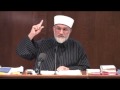
On March 2nd, Dr. Muhammad Tahir-ul-Qadri, a very prominent religious scholar from Pakistan has issued a fatwa (edict), which he himself described as historic, against terrorism and terrorists. This is neither the first, and may not be the last fatwa against terrorism.
But it certainly might be the longest and most comprehensive one. There have been several prominent fatwas issued by Muslim scholars and institutions against terrorism in the past, the fatwa of India’s most prominent Islamic madrassah, Darul-Ulloom Deoband, in 2008, the fatwa by the highest Islamic legal body of American Muslims in 2005 come readily to mind.
Dr Qadri is a prominent mega-Imam who enjoys a large popular following. He also happens to be well ensconced in the traditional Islamic heritage. His is clearly a loud voice of the hitherto silent majority.
Dr Qadri and his large following constitute the mainstream of Muslims in Pakistan and in the Pakistani diaspora. Those who are engaged in extremist violence and those who sympathise with them belong to a more recent Salafi trend. This trend is a recent transplant in South Asia and does not have deep roots in the region.
Dr Qadri’s long 600 pages fatwa is essentially an encyclopaedic compilation of the fiqh of the use of force. It basically accumulates all the various jurisprudential positions advanced by Muslim scholars and jurists of different schools and provides a comprehensive overview of the various normative and ethical limitations that derivatives from Islamic sources have placed on the legitimate use of force.
There is nothing new in Dr. Qadri’s tome and that is a good thing. He is not advancing new interpretations of Islamic sources, nor is he trying to reinvent the wheel. His contribution is to show that not only does Islam prohibit terrorism, it condemns the terrorist to hell. He also shows how Muslims have long held suicide as a forbidden act.
The extremists and their sympathetic scholars, I am confident, will not be able to produce a document that could trump Dr Qadri’s fatwa. The extremist scholars in the Muslim World have relied basically on two elements to advance their radical agenda.
One, they have exploited the widespread theological illiteracy of Muslims to advance out of context and unprecedented new interpretations and justifications for the principle of Jihad to legitimise their crusade against the West and its allies.
Two, they have benefitted from the anger that Muslims have been feeling against the various military attacks and occupations by Western armies of Muslim lands in the past two centuries. Add to this the endless suffering of the Palestinians, Iraqis, Af-Pak civilians at the hands of Western forces and you begin to comprehend why so many of the Muslim youth embraced the un-Islamic interpretations of Islamic sources by radicals clerics.
Dr Tahir ul-Qadri’s fatwa against terrorism might actually have an impact. It is comprehensive, direct, does not dodge any issue. It has come at a time when there is very strong abhorrence for terrorism, specially in Pakistan and it will strip terrorists of what little legitimacy they might be still enjoying in the eyes of Muslims who fear that Islam is under attack by Western powers.
Is Dr Qadri’s fatwa a magic bullet that will erode all anger, frustration and resentment; certainly not. Will it engender a widespread loathing for the use of terrorism as a tactics, most certainly yes, if it is given sustained attention by the media.
In Pakistan, Dr Qadri’s reputation, the growing anger against terrorists for their indiscriminate violence against mosques and against Muslims, will all combine to give the fatwa a chance to marginalise the extremists. The author and his institution also hope that the perception held by some in the West that Islam is the cause of terrorism will be corrected. I am, however, less sanguine about this.
Those in the West who argue that moderate Muslims are not opposing terrorism or those who insist that terrorism is a consequence of Islamic values are motivated by political interests and are clearly Islamophobic. They will not change their mind.
Regardless of its impact on Western perceptions; if this fatwa raises even an iota of doubt in the hearts of those who see no other way but egregious violence as a means to alter the condition of the Muslim Ummah, it should be considered a success.
Dr Muqtedar Khan is Director of Islamic Studies at the University of Delaware and a Fellow of the Institute for Social Policy and Understanding









Comments