
Rethinking Islam : Tahir ul Quadri: The cleric who dares terrorism
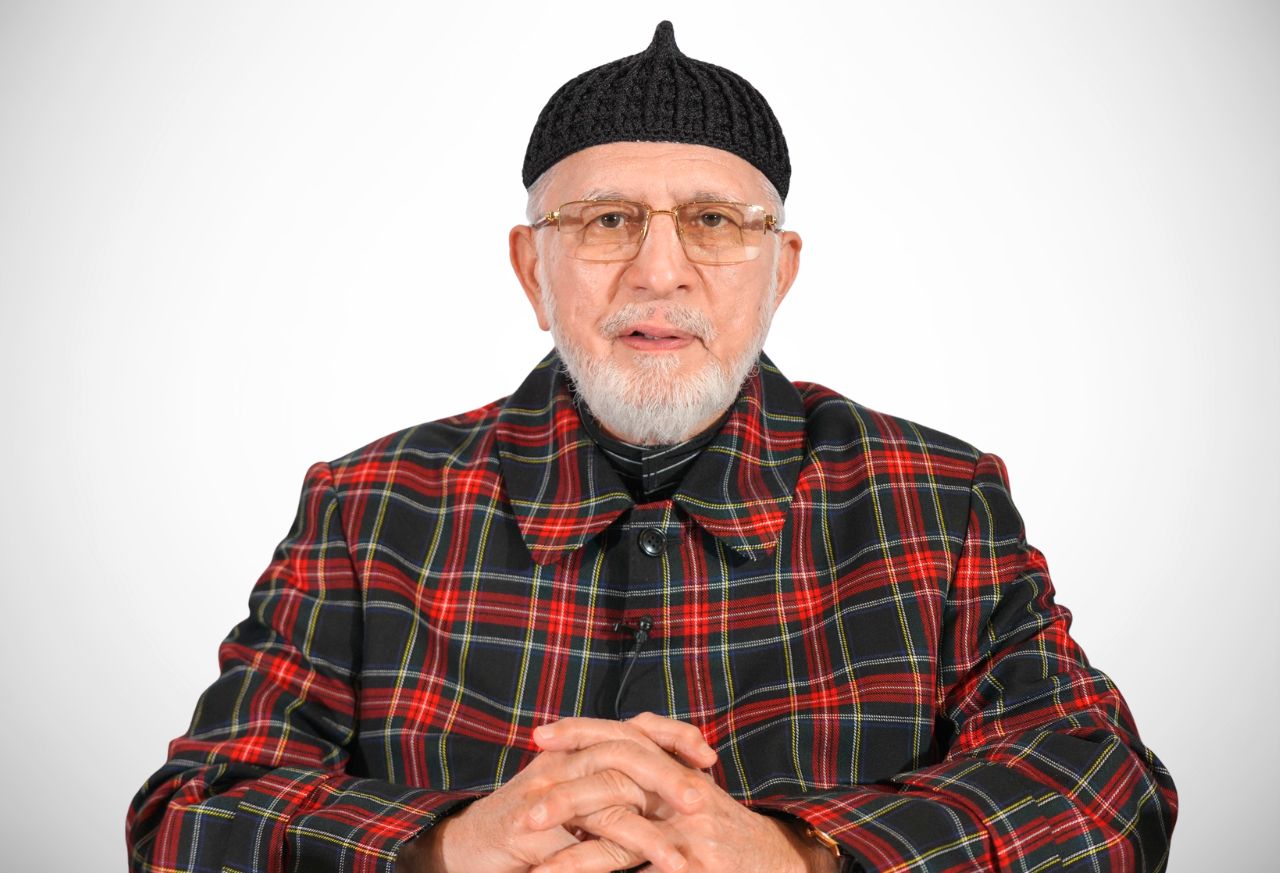
Dr. Muhammad Tahir ul-Qadri is the Pakistani Islamic scholar who recently made headlines with the publication of his 600-page fatwa prohibiting suicide bombing. Ul-Qadri is one of Pakistan's most prominent clerics, and he believes that his fatwa represents a complete theological rebuttal of every argument used by Al Qaeda and other terrorist organizations. In his fatwa, Dr. ul-Qadri asserts that terrorists do not go to heaven but instead are bound for hell, and he utilizes Quranic references, hadith, and scholarly interpretations to reinforce his opinion. Dr. ul-Qadri told Asharq Al-Awsat that he hopes his fatwa will have an affect on the ground and prevent Muslim youth from becoming brainwashed by terrorist ideology. -- Mohammed Al ShafeyBy Mohammed Al Shafey
09 march, 2010
London, Asharq Al-Awsat-Dr. Muhammad Tahir ul-Qadri is the Pakistani Islamic scholar who recently made headlines with the publication of his 600-page fatwa prohibiting suicide bombing. Ul-Qadri is one of Pakistan's most prominent clerics, and he believes that his fatwa represents a complete theological rebuttal of every argument used by Al Qaeda and other terrorist organizations. In his fatwa, Dr. Tahir ul-Qadri asserts that terrorists do not go to heaven but instead are bound for hell, and he utilizes Quranic references, hadith, and scholarly interpretations to reinforce his opinion. Dr. Tahir ul-Qadri told Asharq Al-Awsat that he hopes his fatwa will have an affect on the ground and prevent Muslim youth from becoming brainwashed by terrorist ideology.
Ul-Qadri is the founder of the Minhaj-ul-Qur'an International [MQI] which has branches in more than 90 countries around the world and which works to promote peace and harmony between communities. Dr. Tahir ul-Qadri is also the founder of the Minhaj Welfare Foundation and the Minhaj International University. Dr. Tahir ul-Qadri has published a vast number of Islamic scholarly texts, and he is well known for being a promoter of inter-faith dialogue and a strong critic of Al Qaeda and Osama Bin Laden.
The following is the text of the interview:
[Asharq Al-Awsat] Have you previously issued any fatwas against terrorism?
[Tahir ul-Qadri] I have written 1000 books, 400 books have already been published about one dozen of those books I have written on this particular subject. The first book that I wrote was on this subject and that was in 1995 and it was from the standpoint of human rights. In the first question in the discussion [section] of this book which was published in February 1995, I wrote that the killing of Muslims and non-Muslims in terrorist operations is totally prohibited, and then I quoted about 200 pages on this particular subject. This was in 1995, and soon after 9-11 I wrote this book on human rights; it is called Muqaddima as-Sira and is on the pattern of Muqaddima Ibn Khaldun and I included all of these discussions in this book which is made up of two volumes. I then wrote my second book which was published in 2004 and called Human Rights in Islam. Two thirds of this book is on this particular subject, but it was not in the form of fatwa it was just a research book about human rights and non-Muslims rights and property rights [in Islam].
[Asharq Al-Awsat] Is there a particular reason behind the timing of your issuance of this fatwa prohibiting suicide operations?
[Tahir ul-Qadri] The reason that I issued a fatwa at this particular time is because terrorism has become stronger in Pakistan over the past year, and they have begun slaughtering people like sacrificial animals. Some eye-witnesses have even said that they have unearthed the bodies of people that were killed and hung from trees for days…this was done in Sawat [in Pakistan] where many people were slaughtered. They then started targeting mosques on Friday, and this happened in Karachi, not to mention the Army Mosque in Islamabad, and also [mosques in] Rawalpindi, Peshawar, Kohat, and many other places.
[Asharq Al-Awsat] What do you think about the call for dialogue with the Taliban in order to calm the situation and restore security and stability to the country?
[Tahir ul-Qadri] When such [terrorist] activities began targeting the people praying, first many ulema and scholars and some political leaders went for a dialogue with them [the terrorists] in Sawat…the Pakistani government went for dialogue, but the process stalled, because they [the terrorists] did not act on the basis that they were in a condition of dialogue. Therefore they returned to attacking mosques and schools, and everything was closed, and the same killing resumed.
[Asharq Al-Awsat] Why are religious scholars in Pakistan hesitant about condemning terrorism or terrorist groups?
[Tahir ul-Qadri] I saw many scholars silent on this subject, and they were merely demanding that this military operation be stopped. They were not ready to condemn the terrorists for their terrorist activity. Secondly, if they were asked why they refused to condemn the terrorists, they would try to drag the subject to other issues; they were not interested in addressing this.
Some ulema condemned the acts of terrorists, but these were merely condemnations, they were decisions of one of two pages along with the signatures of hundreds of ulema, but they did not contain any evidence or [citation of] authorities on which grounds this condemnation should be based. There no Quranic or hadith references to convince the brainwashed youth.
[Asharq Al-Awsat] Are the political scholars in Pakistan afraid of violence from Al Qaeda or the Taliban? Could this be a factor in their reluctance to issue condemnations?
[Tahir ul-Qadri] One reason is that many of the scholars are perhaps scared that if anybody declares any decree of fatwa, he is murdered. Over the last twenty years perhaps more than sixty ulema have been murdered either as a result of sectarian terrorism or during the present wave of terrorism. Hassan Ilahi al-Zahir was murdered, and until today nobody knows who was responsible for this. Recently, Dr. Sur-Firas al-Naeimi gave a very small verbal condemnation of terrorism, and he was murdered by a suicide bomber at his madrassa.
Therefore one reason is that they are scared, because there is no protection in Pakistan for anybody. Second is the political reason, because all of these terrorists originate from the North West Frontier Province [NWFP]; from Sawat, from Peshawar, from Waziristan, and most of the ulema have political constituencies in that region. Therefore they find themselves needing to win the votes of the residents of this area…so they have vested political interests. Therefore if they issue a verdict [against terrorism] they issue it with ifs and buts, or with conditions and excuses, and this confuses the youth. Therefore I thought that there should be a fatwa without any conditions and excuses, but with absolute condemnation.
[Asharq Al-Awsat] How would you describe the Al Qaeda and Taliban leaders and their ideologues that push the youth to commit suicide operations?
[Tahir ul-Qadri] These are the ones who brainwash the youth, until they carry out suicide bombings believing that this is jihad. They are the Kharijites of today, according to the hadith the Kharijites "are the dogs of hellfire" because they diverge from the true path and bring division amongst the Muslim community. They believe that this is a kind of jihad and that they will go to heaven, but they will not go to heaven.
These young suicide bombers have been brainwashed, they believe they will become heroes of the ummah, but this is not true at all, they will become heroes of hell, and they will be commemorated there. They are not going to heaven, they are going to hellfire.
[Asharq Al-Awsat] What about countries like Iraq and Afghanistan? Does this fatwa apply to suicide attacks in these countries?
[Tahir ul-Qadri] This is different. When there is warfare in any country, and you are fighting in a battlefield where everybody is killing one another, then everything is permissible during warfare. However even during warfare there are hadith narrated in Sahih Bukhari and Sahih Muslim that confirm that during warfare you cannot kill women, children, or old people; this is haram. You [also] cannot kill their priests, their animals, burn their trees, destroy their property, or kill their farmers; this is the Hadith of the holy prophet [pbuh] prior to the battle of Tabouk. The Quranic verse is also clear, and states "Fight in the cause of Allah those who fight you, but do not transgress limits; for Allah loveth not transgressors. [Surat Al-Baqara; Verse 190]"
This is the Sunnah of our Holy Prophet that is for all mankind. Islam is a great religion, but look at the unfortunate situation that we find ourselves in, people are losing their lives in the mosques and on the streets, they are being killed sleeping in their houses, they are being killed in the markets; the women, the aged, the children, so there is no justification [for this]. These terrorists of Al Qaeda and the Taliban are tarnishing the image of Islam with their indiscriminate killing of innocent people in Pakistan, Saudi Arabia, Afghanistan, Iraq, New York, London, and Madrid.
[Asharq Al-Awsat] Were you in contact with any scholars and sheikhs in the Arab region before issuing your fatwa?
[Tahir ul-Qadri] I am in contact with them almost continually, along with my students, thank God, in all areas of the Arab world.
[Asharq Al-Awsat] Every day we are seeing suicide operations being carried out against the Americans, so how can anybody justify this?
[Tahir ul-Qadri] Whenever a suicide bomber carries out an operation that results in the death of innocent people then this is prohibited and totally haram. Islamic teachings say that it is better to leave 99 sinful people than kill one innocent person, and as the Holy Quran says "whosoever killeth a human being for other than manslaughter or corruption in the earth, it shall be as if he had killed all mankind [Surat al-Maeda; Verse 32]." This verse reveals two things, killing of a person is a sin, it is haram, and considering this killing lawful, this is blasphemy.
[Asharq Al-Awsat] Al Qaeda and other terrorist groups brainwash the youth saying that if they undertake suicide operations they will go to heaven where they will have 72 virgins, is this true?
[Tahir ul-Qadri] Absolutely not! Absolutely not! This is rubbish!
[Asharq Al-Awsat] Where are they going then?
[Tahir ul-Qadri] They are going to hell. They are going to hell, because they are killing human beings, they are killing women, children, old people. They kill the innocent, non-combatants, and so they are going to hell. The prophet peace be upon him said that "whoever kills a person who has a truce with the Muslims will never smell the fragrance of Paradise" while in another hadith the Prophet confirmed they would go to hell.
[Asharq Al-Awsat] Do you believe your fatwa will have an effect in Pakistan, on the Taliban?
[Tahir ul-Qadri] Let me create a distinction. There are three kinds of people that you can consider to be on the extremist terrorist side. Firstly there are the extremist leaders. The second category are those who are 100 percent brainwashed; they have no ability to understand, they are not open to reason, or they are in a situation where no book can reach them. I would exclude these two categories of people. Next are the thousands of youth who have not yet reached this point, but who are already proceeding along this path, and they have the potential to become extremists and terrorists. These youths number in the thousands, they are much larger in number [than the previous two categories] and they will definitely be affected by this fatwa, because it is aimed at them. They will hear about it through the media, and they may also be aware of my name.
The majority of these youth belong to different countries, and they aware that I never talk without authority. I never say a single thing without the authority of the Quran, the Sunnah, or the authority of the great imams. So they will be obliged to read it. We are going to prepare DVDs and online video recordings [of this fatwa], and they will read the Quranic verses and the tafsir [Quranic interpretation] and the hadith and the great authorities, and they will definitely have to change their minds. They will discover that what they were taught is a different story, and this [fatwa] is an absolutely different teaching. This will create doubt in their mind and they will be obliged to read this again and again and I hope – God willing – that Almighty God will grant them wisdom.
[Asharq Al-Awsat] How effectively do you believe a fatwa can influence the situation on the ground?
[Tahir ul-Qadri] It can influence the potential extremists and terrorists. They will be influenced by the fatwa when they read or listen to it, because they are Muslims, and there is a room to understand what the Quran, or the words of the great imams like Sheikh Ibn Baz or al-Albani or Sheikh al-Islam Ibn Tammiyah. However they were tricked into listening to al-Zawahiri and Bin Laden and the Kharijites of today, and it is the role of imams and scholars to reveal the "deviant ideologies." They have only been listening to one side of the story, and I am sure they were never taught that killing innocents leads to hell. When they come across the dozens of hadiths [to this effect] they will be shocked; so this is how we will change their minds.
They are confused whether their acts of terrorism and killing people is right or
wrong, they are stuck in the middle path, so when they read [this fatwa] the concept
of terrorism will become clear to them and they will be able to differentiate between
the right way and wrong way of defending their rights.
Islam suggests peaceful means of protest, and regime change. I think the more [such
fatwas] are available to the people, the more it will be able to gradually change
the situation on the ground.
[Asharq Al-Awsat] How would you describe the terrorist ideologues and leaders?
[Tahir ul-Qadri] I will describe them categorically, and according to Sheikh al-Islam Ibn Tammiyah, who said that they were the "Kharijites of today." The Holy Prophet said that they will continue to emerge in my ummah throughout history, their presence is continuous, and the last of them will emerge with the Masih ad-Dajjal [false Messiah]. They are not going to heaven, they are going to hellfire.
Source : http://rethinkingislam-sultanshahin.blogspot.com/2010/03/interview-12-mar-2010-newageislam.html









Comments