
GOATMILK: A fatwa they can work with?
By Dominic Casciani
BBC News
He’s a man on a mission – a mission to state the obvious.
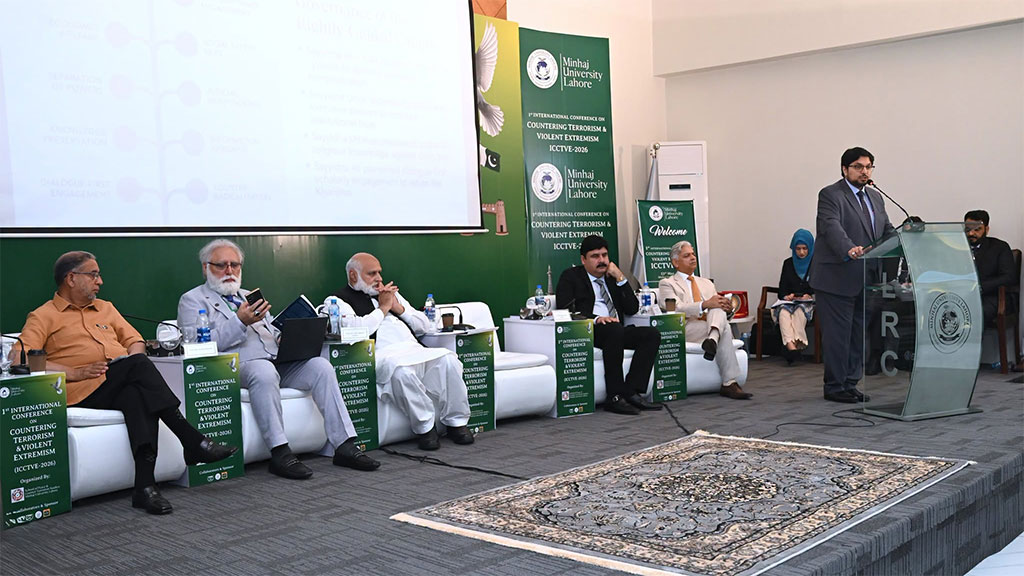
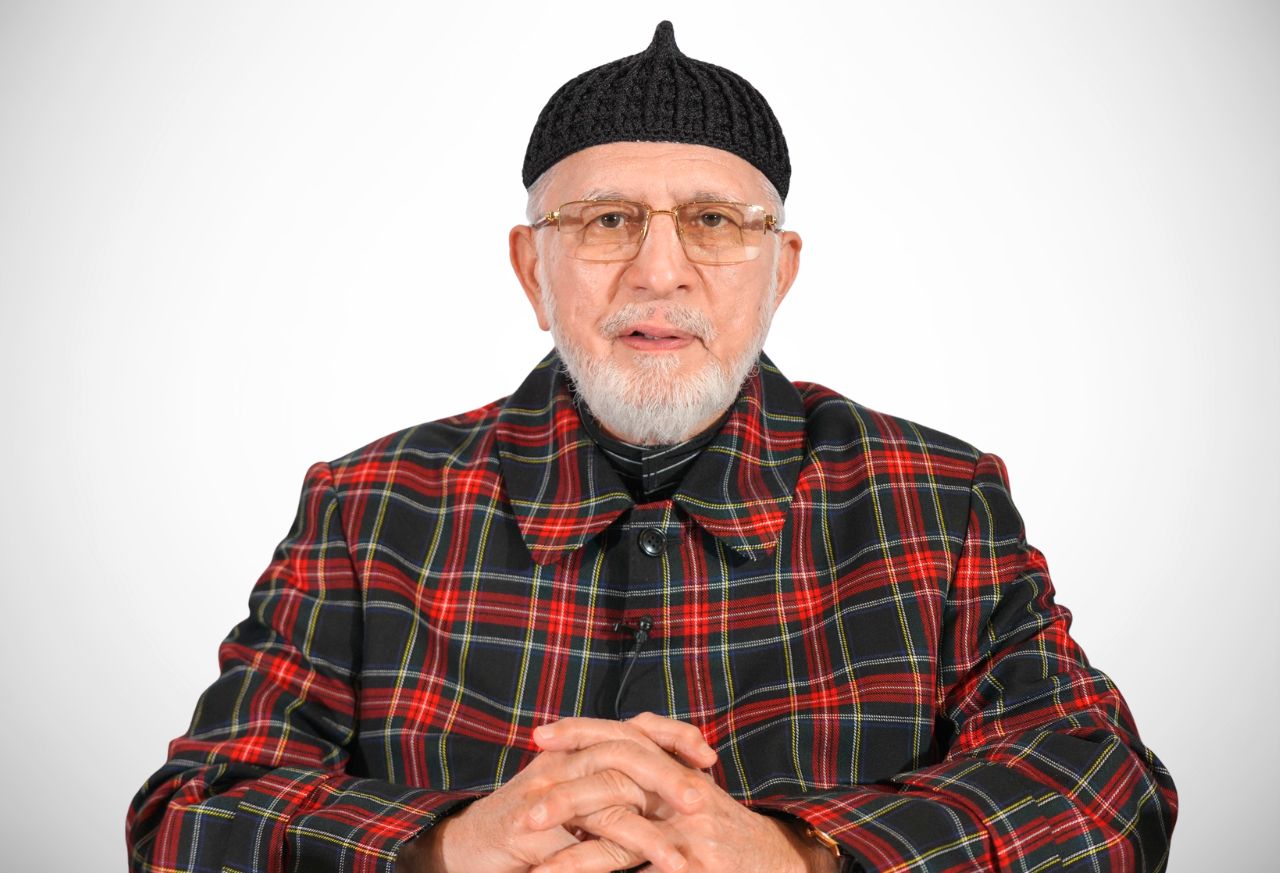
But for Dr Muhammad Tahir ul-Qadri it is the obvious facts that need stating loudest. Last week the Pakistani-born cleric took to a stage in London to declare his Islamic religious ruling, or fatwa, against terrorism.
There was a man from the other side of the world telling an audience that included Parliamentarians and other government officials what they had been wanting to hear. A clear, concise and quotable denouncement of al-Qaeda’s worldview.
Canada-based Dr Qadri spoke for more than an hour on his reasons why the Koran forbids the murder and mayhem of suicide bombings.
“ If [the child] he has reached the stage where he is a terrorist, the parents are duty bound according to Islamic law to inform the anti-terrorist squad ”
“This fatwa is an absolute condemnation of terrorism. Without any excuse, without any pretext, without any exceptions, without creating any ways of justification,” he said.
“This condemnation is in its totality, in its comprehensiveness, its absoluteness, a total condemnation of every act of terrorism in every form which is being committed or has been committed wrongly in the name of Islam.”
Classically trained
Dr Qadri is a classically-trained Islamic scholar and his organisation, Minhaj ul-Quran International, has spent 30 years building a strong following in Pakistan.
He is also a former Parliamentarian who was very close to Benazir Bhutto, the former Pakistani prime minister assassinated by a suicide bomber in 2007.
Some two years on, Dr Qadri’s vast review of what Islam says about terrorism comes down to the very simple idea that there is no theological or moral case for a wronged party being allowed to seek vengeance against the innocent.
His fatwa makes detailed observations of the principles of a just war and rules of engagement. And he goes further than some scholars in stating that bombers who use an ideology to justify their actions have turned away from their faith.
His arrival in the UK was a quite deliberate attempt to shake things up. The youth, he says, need more help to counter the brainwashers. But in saying so, the fatwa became political.
Its launch was notable not just for who was there from the corridors of power, but who wasn’t from the Muslim communities.
Supporters from communities close to his own background turned out. But the head of the Muslim Council of Britain, the umbrella body representing 500 groups, sent apologies. Some of the scholars who had signed a fatwa led by the MCB against terrorism after the 7 July attacks, were not there either.
Community fault lines
Dr Qadri’s intervention in the UK has exposed complicated fault lines in the Muslim communities that often go unseen. Some people in the MCB are suspicious of his motives. One Muslim campaign group close to the MCB, iEngage, accused Dr Qadri of sectarianism. He denies trying to stir things up.
“I have never been sectarian in my life. Never, ever,” he says.
“I have helped Christians to celebrate Christmas. But that liberal point of view is not acceptable to [some Muslim groups in the UK].
“They talk about openness and integration but what do they really believe in? The language of the heart and the language of the mouth are different. “
Dr Qadri goes on to criticise scholars whom he believes are equivocal over violence in Israel or any other situation where they claim there are exceptions that make suicide bombing permissible.
He reserves special ire for scholars who argue that there the West is part of a “sphere of war,” calling them “quacks” who have understood neither Islamic history, nor how to interpret the present.
But the real question is whether anyone is listening? Can a son on the edge of turning to al-Qaeda be brought back by his family?
“If he has reached the stage where he is a terrorist, the parents are duty bound according to Islamic law to inform the anti-terrorist squad,” he says banging his point home on the table.
“If he is at the stage where he can be reformed, then they should take every possible act to reform him.”
Countering extremism
But almost five years on from London’s 7/7 attacks, in which 52 people died, there is no settled view on how to do it.
Government has put a lot of effort into backing groups like the Quilliam Foundation, a counter-extremism think tank led by two former members of a legal Islamist movement.
There are separate programmes involving the police and Security Service which deal with people right on the cusp. It uses a variety of methods – but some experts believe the best results come from deploying hardline Saudi-influenced clerics who have the street credibility to mentor a youngster while demolishing al-Qaeda’s arguments.
There is tension between the two camps – because there are a great deal of people who see hardline clerics as part of the conveyor belt that ultimately leads to terrorism.
But both sides at least agree that they need a proper “toolkit” of theological arguments.
“If someone is going to be a suicide bomber, they have to be 100% convinced that they are going to heaven,” says Maajid Nawaz, co-director of the Quilliam Foundation. “If you can put just 1% of doubt in their minds, then you could stop them. And you do that that by presenting them with detailed evidences from Islam itself. This fatwa helps.”
That’s not an argument that washes with everyone.
Azzam Tamimi, a Palestinian academic based in London, infamously became a tabloid hate figure by supporting suicide bombing in Israel because it was the only means of self-defence available. He is less well known for the critical role he played in helping the police bring down the now-jailed preacher Abu Hamza.
“People who resort to these bombings do it because they believe it is justified, that it is commendable and rewardable,” he says. “Otherwise they would not do it. For every fatwa there is a counter fatwa.”
Amid all this fatwa flashing, many Muslims fear divide and rule – and suspect that someone, somewhere will use Dr Tahir ul-Qadri to further that agenda.
The scholar sees this as the signs of paranoia brought on by a weakness – and his answer is to expand his organisation’s mission in the UK beyond its 10 mosques and 5,000 members.
So will Dr Qadri’s fatwa do some good or end up on the great big pile of similar denouncements?
An hour after he delivered his address, the former leader of al-Muhajiroun, a group recently banned for extremism, turned up at the doorstep of a news channel and asked to go on air to counter Dr Qadri.
Would he have bothered if the scholar was such an irrelevance in the battle for hearts and minds?
It is refreshing to finally see a positive story which reflects the majority opinion in the Muslim community around the world, which denounces terrorism in all its forms. The only surprising thing is how these stories are never covered, despite being a widespread view by the overwhelming number of Muslim scholars. Generally, the only Muslims that seem to get any coverage are extremists like Anjem Choudary who represent no one. As a British Muslim, it really is such a depressing sight to see this man constantly being given a platform in the media to voice his abhorrent views. Ali Khoei, London
I am a Muslim and an Indonesian, the country with the most Muslims on the planet, also a country witnessing an increasing “birth rate” of fatwas. Do I bother to follow those fatwas? Do my fellow Indonesians? No. Pecundang, Berlin, Germany
Great effort Dr Tahir ul Qadri. We couldn’t build the courage to express similar views as loudly but we certainly have the courage to support you all the way. It is time to recover our hijacked image of Islam and ask these hijackers to leave our Islam alone. We need peace, we need rehabilitation from this trauma, we need to recover and we will but after this new war against hijackers. We are after all the moderate majority of Muslims against the extremist minority. Now with this Fatwa, our majority is not the only strength… we are also backed with stronger arguments. Faisal Hussain, Cardiff
About time too. Dr Qadri is saying what all my Muslim friends say but he’s said it loudly and in public. Perhaps if the media reported his words more and the words of people like Abu Hamza a lot less, Britain would be a nicer place for all of us to live. Peter, Notts
Other than insinuation, what evidence do you have that “some people in the MCB are suspicious of his motives”. News sources (such as Reuters) have quoted the MCB as saying that it welcomed Qadri’s comments. I’m looking at the list of affiliates for the Muslim Council of Britain, and ‘iengage’ is not a member. How is it affiliated?
I suspect you are referring to the MCB’s former media spokesman, Inayat Bunglawala. But even he is quoted in the Independent newspaper for saying: “This adds to the view of many Islamic scholars internationally that terrorism and suicide bombings are unacceptable in Islam,” he said. “It is a positive initiative. Anything that helps move young people away from violence and from those who promote violence must be welcomed.” Jafar Sadiq, London
Story from BBC NEWS:
http://news.bbc.co.uk/go/pr/fr/-/2/hi/uk_news/magazine/8550927.stm
Source : http://goatmilkblog.com/2010/03/11/a-fatwa-they-can-work-with/






Comments