
True happiness is a journey, not destination
Source: http://www.indiannewslink.co.nz
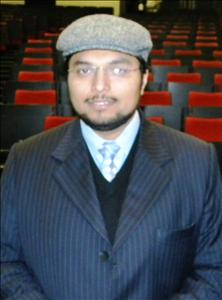
By Hussain Mohi-ud-Din Qadri
 Happiness
has remained an elusive concept over the centuries.
Happiness
has remained an elusive concept over the centuries.
Philosophers, religious scholars, sociologists and academicians have tried to define happiness, with some regarding it as a material thing for which material possessions have been identified as a means to achieve happiness.
Others are of the view that happiness has nothing to do with material pursuits and that it is a moral or a spiritual phenomenon which one can acquire by doing the right things.
Despite these definitions and explorations, the idea is as Greek as it was before.
However, if you want to be happy but are not sure where to start, I suggest you begin by being kinder. Acts of giving will boost your wellbeing as well as offer something good to the recipient and the world at large.
These acts can take many forms and so you can do something that suits you personally. For instance, you can do voluntary work for a philanthropist organisation; you can do good deeds in your neighbourhood, for friends, family, work colleagues and even strangers.
Happiness lies in giving to others. When you stop thinking about yourself, it is then that the journey to happiness starts. Our focal point is always I or me. These two words are the cause of sadness that we suffer. Whenever we run after something to achieve, it runs away faster from us. But when we decide to turn our back on our sought-after pursuits, those things would come for us.
This is the law of Nature, which is immutable and never changes.
If real happiness could be achieved by having lots of money and concentrating power, then kings would never have left their thrones in search of happiness.
Buddha, Ashoka, Ibraham bin Adham are a few examples from the history. They abandoned their exalted positions to find solace and happiness. They found happiness once they started serving the poor and the needy of God’s creations.
Childhood bliss
The happiest time of our life lies in our childhood. As we grow older, our desires grow as well. Sadness follows unfulfilled desires. In order to acquire eternal happiness, we need to get rid of our desires. That is why it is said that the best state to go back to God is the state in which you were born. That is the state of innocence with one’s soul untainted by the worldly desires.
You do not have to volunteer work to be a kinder person but carry out good deeds in your home or at work. You can do something for people you do not know.
Try to give people the benefit of the doubt. Let them make creative mistakes and learn for the sake of personal growth. Offer genuine compliments. Give small gifts. Plan something special for a loved one. Share your possessions without getting uptight about them.
Avoid gossiping in emails and on the telephone. Instead, make a conscious effort to only say good things about others. You always have something to offer.
 Positive
attitude
Positive
attitude
Think of ways you can share that information. Think of ways in which you might be a positive influence on someone’s life. When you see an opportunity to help, take it.
Not every act of kindness needs to be acknowledged. You are better off assuming the opposite. You are performing good deeds because you want to, not for the thanks but for the sake of happiness that springs from inside.
It’s a great way to increase your humility. Recognise that each act, no matter how small, will make a difference. It does not have to be the grand gesture.
The way to transform happiness from individual level to the collective phenomenon is to make efforts aimed at making your country and society welfare-oriented.
One can start this endeavour from the grassroots level by establishing welfare committees and keep on expanding its ambit.
It calls for establishment of systems and arrangements for doing well to people in an institutionalized manner. That is why the People of the Sub-continent rendered numerous sacrifices for their countries inspired by their leaders.
Let us resolve to make our countries modern and welfare-oriented as per the dreams of our founding fathers.
Hussain Mohi-ud-Din Qadri is President, Supreme Council and Federal Council of Minhaj-Ul-Quran International and a member of the Board of Governors, Minhaj University, Lahore, currently in Melbourne for his PhD in Economics. He is the son of Dr Muhammad Tahir Ul Qadri, an internationally renowned thinker and scholar. Read related stories in this Special Report.










Comments