
Women Training Itikaf 2009: Third Day
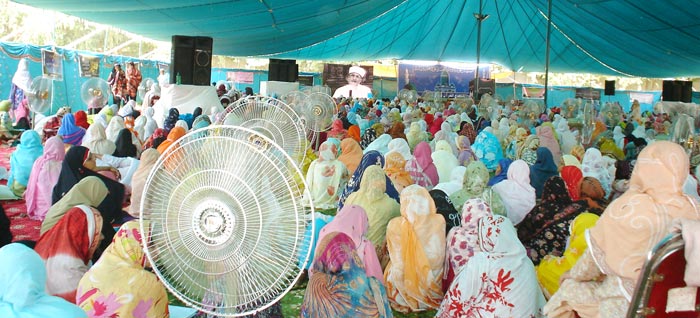
23rd of Ramadan commenced with great blessings. The Sunnat and Salat Committee recited Durood and Kalama-e-Tawhid with great enthusiasm and wakened up the ‘mu’takifat’ for Tahajjud prayer. The announcements with regard to following the Sunna continued during Sahri and the Mess Committee served the participants with food in their rooms. And according to the scheduled routine Fajr prayer was offered followed by Halqa Dhikr wa Durood in the assembly area. The Nizamat Dawat briefed the participants on the methods, rules and pattern of a standard Halqa-e-Durood. The ‘mu’takifat’ then observed the ritual of reciting their individual wazaif in their rooms and then reposed for a while. They came to the assembly area for congregational Salat-ut-Tasbih after 08.30.
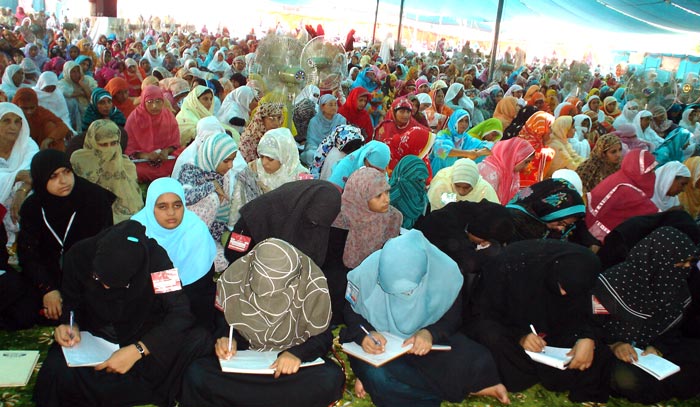
The address by Shaykh-ul-Islam Dr Muhammad Tahir-ul-Qadri started at 11.00. He continued his discourse on Khalwa and Uzla (Retreat and Seclusion). While giving its comparison to collective and social life he said that we acquire the understanding of Deen (tafaquh) in company (jalwat) but attain inner purification, pleasure of and nearness to Allah in retreat (Khalwa). So while we achieve superiority in collective life, we gain security and protection in seclusion. We get to know Deen from teachers in company and make it secure in seclusion. He said Itikaf is a unique blend of these two experiences. He then mentioned scores of examples from the sacred lives of the pious predecessors especially Saeed ibn Musayyab, Sa’ad ibn Abi Waqqas, Uthman ibn al-Aas, Maalik ibn Deenar, Sufyan Thawri, Ibrahim ibn Adham, Junaid Baghdadi, Fudail ibn Ayyad, Abu Ali ad-Daqqaq, Abu al-Qasim al-Qushayri and many others. He urged upon Mu’takifeen that they are here by leaving their places for seclusion, but they should now take another jump and get out of the present time and start living psychologically among the pious souls of the first Hijra century. He said all these great saints belong to that era. So let us live with them for a while. They will give us their light even today.
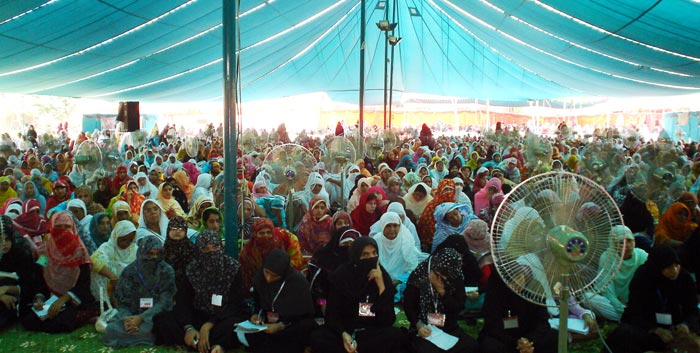
He said Khalwa belongs to the purified while Uzla (psychological withdrawal from the world) marks the people of union. The seeker needs to withdraw from his own kind in the beginning stages. Then, in the last stages, he needs to retreat in order to confirm himself in intimacy with God. Talking about the intention to adopt seclusion he said: If the servant chooses to withdraw, his intention must be to separate himself from people so that they will be safe from his evil – he must not be looking to protect himself from their evil. According to Maalik ibn Dinar the pious advise three things to do: hold your tongue, beg for forgiveness abundantly and go to retreat the maximum. He quoted Sufyan Thawri saying: I love to be among the people who do not know me but whom I know. All that concentrates on one thing alone and that is: getting distant from the ill-commanding self and getting purer and nearer to the Creator. Here he quoted Fudail Ibn Ayyad saying: I wait for the night; when it falls heart feels at ease. Then I have private conversation with Allah and get extinct to my self. When the night is about to end I get perturbed for then I feel meetings with the people would start afresh and I would be deprived of this company with my Lord. Shaykh-ul-Islam then enumerated and elaborated the benefits of seclusion. One attains to inner purity, and gets protected against backbiting jealousy, malice and greed. It adds pious attributes to one’s personality which become a source of blessings when one gets back to the company. He quoted Junaid Baghdadi saying: Allah will ask on the Last Day what have you brought or me? The servant would reply: ritual prayers, hajj, fasting Zakat etc. Allah would say you were blessed with favours and forgiveness in lieu thereof. What have you brought for me. Then the one who would have adopted seclusion and got nearer to Him would submit: I have brought for You Your love and the time I spent in seclusion for You And with You distant from my self. In the end he prayed for Allah’s blessings for all and a purer inner self.
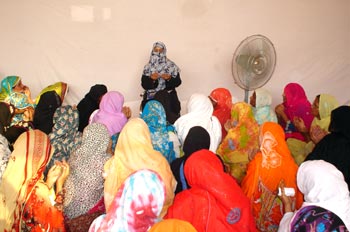
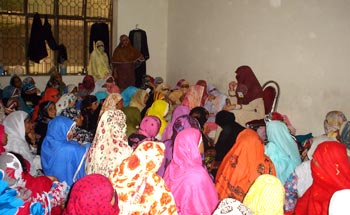
After Zuhr prayer Sajida Sadiq held meeting with MSM students and explained to them the procedure how to go about achieving targets of membership. The head Discipline Committee held meeting with its members and motivated them to promote polite manners. Later the Mu’allimat delivered their Dars No. 3 of Sura Noor in Halqa-jaat. It included implication of al-Ifk, hadith about false allegation against Hadart Aisha (may Allah be well pleased with her), none of the wives of the Holy Prophet ever committed evil, and the merit of excellence of Hadrat Aisha (may Allah be well pleased with her).
Mehfil-e-Na’at was then arranged in the assembly area and Na’at Council from Faisalabad presented beautiful Nasheeds. At Iftaar time the Iftaari was served to the participants in the rooms. Then the evening and the Isha prayers were performed and Salat-ut-Trawih was offered. Mohtarma Rafia Ali delivered her talk on versatile personality of Shaykh-ul-Islam. Then the Itikaf Supervisor Shaykh Zahid fayyaz held meeting with the Central Itikaf Committee and surveyed the performance. He congratulated the members on making excellent arrangements and running the Itikaf proceedings satisfactorily.







Comments