
Truthfulness and Trustworthiness Are the Cornerstones of the Holy Prophet’s ﷺ Noble Character — Dr. Tahir-ul-Qadri
Address by Shaykh-ul-Islam Dr. Tahir-ul-Qadri on “The Noble Character of the Holy Prophet ﷺ” at the 8th Moral and Spiritual Session
Addressing the eighth moral and spiritual training session held at the central secretariat of Minhaj-ul-Quran International on the topic “The Noble Character of the Holy Prophet ﷺ,” Shaykh-ul-Islam Dr. Muhammad Tahir-ul-Qadri stated that the blessed life (Seerah) of the Holy Prophet ﷺ is a complete embodiment of truthfulness (sidq), trustworthiness (amanah), and maintaining ties of kinship. He ﷺ always reconnected broken relationships and guided humanity toward love, truth, and goodness.
Dr. Tahir-ul-Qadri explained that truthfulness is not merely about speaking the truth; rather, it encompasses the truthfulness of a person’s entire personality—intentions, thoughts, actions, and character. Being Sadiq al-Hadith (truthful in speech) does not only mean that the Prophet ﷺ spoke the truth, but that his entire life and character were the epitome of truth.
He further stated that truthfulness originates in the heart, just as falsehood also begins there. Before a person tells a lie, an intention, thought, and desire arise in the heart, which then manifests through the tongue. Similarly, truth begins in the heart and passes through intention and action before becoming evident. Therefore, the real center of truth and falsehood is the inner self.
Referring to a Hadith, Shaykh-ul-Islam said that a hypocrite has three major signs: when he speaks, he lies; when he makes a promise, he breaks it; and when entrusted, he betrays. He emphasized that falsehood is not limited to the tongue—it can also be through the eyes, ears, thoughts, and intentions. Trustworthiness and truthfulness are deeply interconnected. If a person commits dishonesty in financial, moral, or positional responsibilities, it is in fact a form of falsehood and betrayal. Misusing authority, violating people’s rights, or wasting time and resources are all forms of betrayal that lead to severe consequences.
Shaykh-ul-Islam further said that according to a mutually agreed Hadith in Bukhari and Muslim, the Holy Prophet ﷺ said: “Each of you is a guardian, and each of you will be questioned about those under your care.” This means every individual holds some form of responsibility—whether within the family, in educational settings, or in societal and state affairs. Fulfilling these responsibilities with honesty and sincerity is true righteousness and leads to success in Paradise. Neglecting duties, misusing authority, or failing to observe discipline constitutes falsehood and betrayal.
He stressed that righteousness is not confined to mosques, religious institutions, pulpits, or spiritual retreats; rather, it extends to homes, society, institutions, and systems of governance.
Dr. Qadri added that Islam teaches excellence in every action. The Holy Prophet ﷺ said that Allah loves when a person performs any task with excellence. If someone is given a position and salary but seeks unlawful benefits, gifts, or favors beyond it, this too is betrayal. Therefore, every individual must treat their responsibilities as a trust. Truthfulness must be reflected in all areas of life—fulfilling the rights of family members, ensuring justice in society, safeguarding institutional resources, and being punctual are all aspects of honesty and integrity.
Quoting Hazrat Umar ibn al-Khattab (RA), he said: “Hold yourself accountable before you are held accountable.” A person should engage in daily self-reflection to assess shortcomings in intentions, actions, and responsibilities. One who practices self-accountability in this world will find the reckoning of the Hereafter easier.
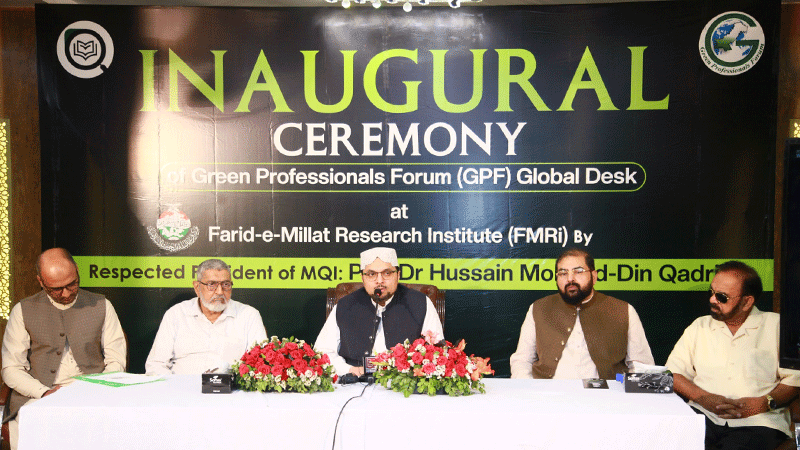
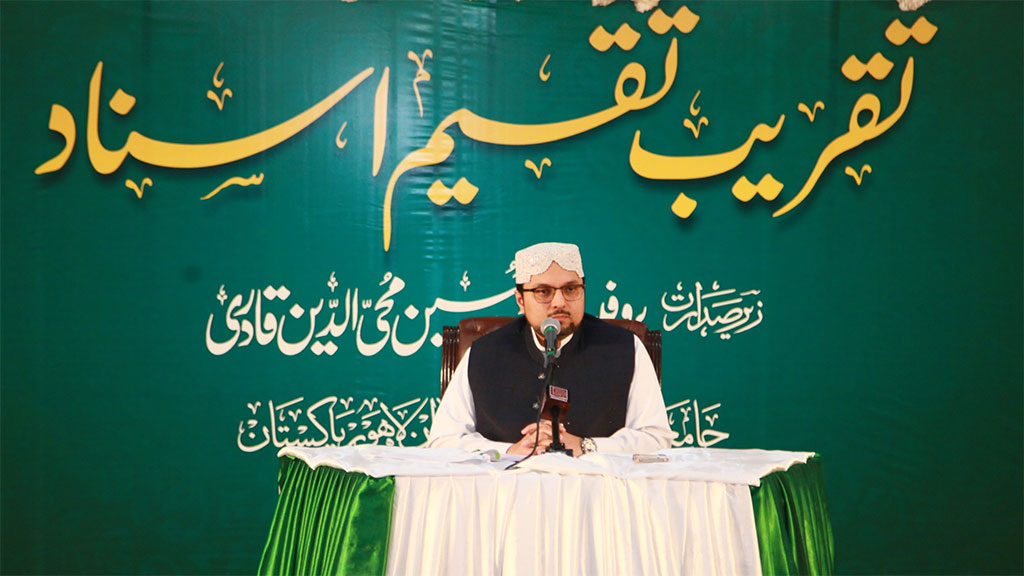
The session was attended by Chairman Supreme Council Minhaj-ul-Quran International Prof. Dr. Hassan Mohi-ud-Din Qadri, President Minhaj-ul-Quran International Prof. Dr. Hussain Mohi-ud-Din Qadri, Secretary General Khurram Nawaz Gandapur, President Minhaj-ul-Quran Women League Dr. Ghazala Qadri, Ms. Fizza Hussain Qadri, founding leader Shaykh Muhammad Aslam Qadri, founding leader UK Haji Abdul Ghafoor Qadri, along with scholars, leaders of the movement, and a large number of participants from the general public.






Comments